

Electric Pallet Truck
Our electric pallet trucks combine the reliability of traditional pallet trucks with the power and efficiency of electric drive. Designed for high-throughput warehouses and logistics centers, these powered forklifts reduce operator fatigue and increase productivity. Featuring a high-capacity lithium battery, maintenance-free motor, and intuitive controls, they are the ideal solution for modern material handling operations.
- High-efficiency electric drive motor for smooth acceleration and braking
- Lithium iron phosphate (LiFePO4) battery —fast charging, long cycle life
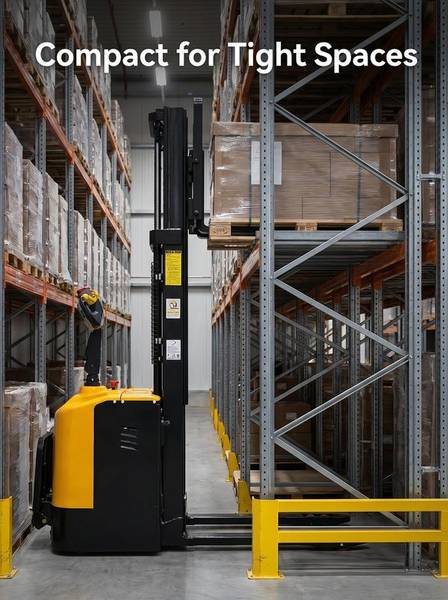
- Compact and lightweight design for maneuverability in tight spaces
- Ergonomic tiller arm with twist-grip or thumb throttle control
- Regenerative braking system extends battery life per charge
- Emergency reverse button and auto-cutoff safety features
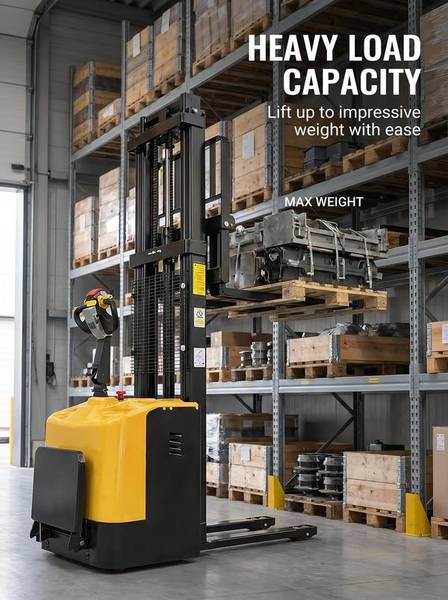
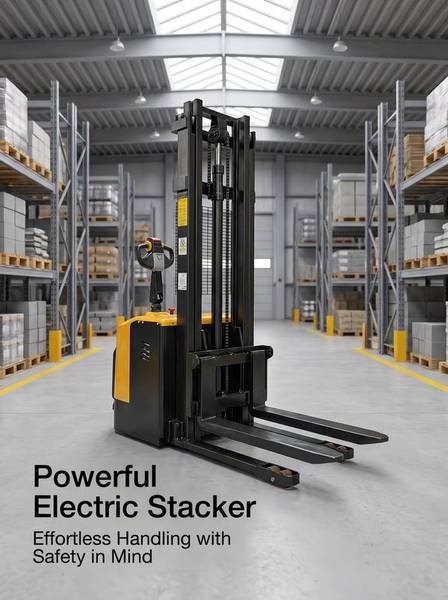
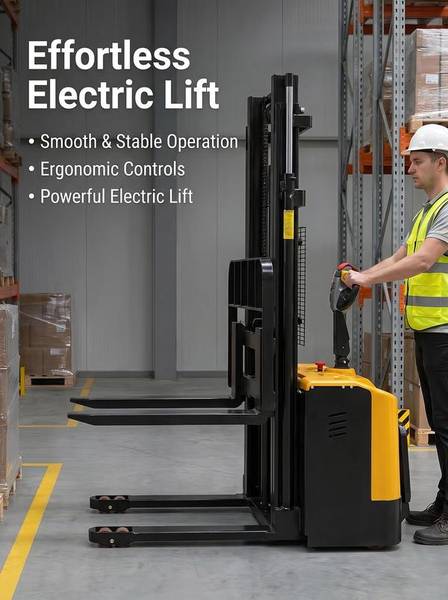
Product Gallery
Technical Specifications
| Model | Capacity (kg) | Battery Type | Battery Voltage | Drive Motor | Max Speed | Fork Length (mm) | Net Weight (kg) |
|---|---|---|---|---|---|---|---|
| CL-EPT15 | 1500 | LiFePO4 | 24V / 20Ah | DC 0.75kW | 5.5 km/h | 1150 | 145 |
| CL-EPT20 | 2000 | LiFePO4 | 24V / 30Ah | DC 1.2kW | 5.5 km/h | 1150 | 160 |
| CL-EPT25 | 2500 | LiFePO4 | 24V / 30Ah | DC 1.2kW | 5.0 km/h | 1220 | 175 |
| CL-EPT30 | 3000 | LiFePO4 | 24V / 40Ah | DC 1.5kW | 4.5 km/h | 1220 | 195 |
Applications
- High-volume warehouse operations
- E-commerce fulfillment centers
- Supermarket & retail backrooms
- Manufacturing assembly lines
- Food & beverage storage
- Pharmaceutical logistics
- Container loading & unloading
How to Choose the Right Electric Pallet Truck
Choosing an electric pallet truck comes down to five things: the load, the pallet, the floor, the aisle, and how many hours a day the truck works. Get those right and the model usually picks itself.
Load capacity — the data plate is the only number that counts
Rated capacity is always quoted at a stated load centre, and it falls as the load centre moves forward. A truck rated 2,000 kg at 600 mm does not carry 2,000 kg at 1,200 mm. Check the plate against the heaviest pallet you actually handle, not the average one — the outlier is what breaks a truck.
Fork dimensions — measure your pallets before you order
Euro pallets (1200 × 800 mm) and UK pallets (1200 × 1000 mm) generally take forks around 1150 mm long and 520–540 mm wide. Longer forks (1220 mm and above) let you move two pallets at once or handle oversized loads, but they widen the turning circle and reduce capacity. This is the single most common specification mistake we see — and it is expensive to fix after the truck has shipped.
Lift height — a pallet truck is not a stacker
Low-lift pallet trucks raise the forks roughly 115–200 mm, enough to lift a pallet clear of the floor and move it. They do not stack. If your operation needs to put a pallet onto a rack or on top of another pallet, you need a stacker or a counterbalance truck instead.
Wheels — match them to your floor, not to the price
- Polyurethane (PU) — the default for smooth concrete and epoxy. Quiet, non-marking, gentle on the surface.
- Nylon — rolls more easily under heavy loads and copes with rough or uneven concrete, but is noisy and can mark soft flooring.
- Solid rubber — for outdoor yards, dock ramps and wet conditions.
Duty cycle — size the battery to the shift, not the price list
A single-shift operation moving a few dozen pallets a day and a three-shift distribution centre moving hundreds do not need the same battery. Estimate pallets per hour and operating hours per year before choosing between our 20 Ah and 40 Ah models.
Standards & Compliance
Pallet trucks sold into the EU fall under the Machinery Directive 2006/42/EC, with technical requirements set out in the EN ISO 3691 family of industrial truck safety standards. Which part applies depends on the truck:
- EN ISO 3691-5 covers pedestrian-propelled trucks, including low-lift pallet trucks with lift height up to 300 mm and rated capacity up to 2,300 kg.
- EN ISO 3691-1 covers self-propelled industrial trucks, with supplementary requirements in EN 16307. Heavier battery-powered models generally fall here.
- ANSI/ITSDF B56.1 is the equivalent reference for the North American market.
One thing worth knowing when you compare suppliers: EN 1757-1, EN 1757-2 and EN 1757-4 have been withdrawn and superseded by EN ISO 3691-5 and EN 16307-5. A quotation that still cites an EN 1757-2 test report is quoting a cancelled standard. Ask for the current edition, and ask for the EU Declaration of Conformity signed by the manufacturing entity rather than by a trading intermediary — that distinction matters if you ever need to defend the paperwork.
Lithium (LiFePO4) vs Lead-Acid
All four CL-EPT models run lithium iron phosphate batteries. Compared with the lead-acid packs still common on older trucks, LiFePO4 brings three practical advantages: opportunity charging (top up during breaks instead of swapping packs), no maintenance (no watering, no equalising charge, no gassing), and a longer cycle life before capacity drops noticeably. The trade-off is a higher upfront price. For one shift a day on a tight budget, lead-acid can still make sense — tell us your shift pattern and we will say so rather than upsell you.
Maintenance Schedule
Electric pallet trucks have few wearing parts, which is exactly why the ones they do have get neglected. A workable schedule:
- Before each shift — check the emergency reverse button, listen for abnormal noise from the drive unit, confirm the battery charge is enough for the shift.
- Weekly — inspect the forks and frame for cracks or deformation, clean debris from the wheels, check the tiller arm returns to the vertical position on its own.
- Monthly — lubricate the tiller pivot and lift linkage, inspect wheel bearings, check all fasteners for tightness, test the horn and any warning devices.
- Annually — a full inspection by a competent person, covering the hydraulic system, wiring insulation, and brake function. In the UK this is a LOLER thorough examination requirement; other markets have equivalents.
Wheels are the part most often replaced, and worn wheels are usually a symptom rather than a cause — they wear fast when the truck is overloaded or run on damaged flooring.
Frequently Asked Questions
Can an electric pallet truck work in a cold store?
Standard lithium packs lose usable capacity in freezing conditions, and condensation is a real risk when a truck moves between a freezer and ambient air. Cold-store operation needs a specified package — appropriate lubricants, sealed electrics, and a battery rated for the temperature. Tell us your temperature range and dwell time.
What is the difference between a pallet truck and a stacker?
Lift height. A pallet truck lifts a pallet 115–200 mm, enough to move it. A stacker lifts it high enough to place it on a rack or on top of another load. If you need to stack, a pallet truck is the wrong machine however powerful it is.
How long does the battery last on one charge?
It depends far more on the duty cycle than on the battery. A 20 Ah pack suits light, short-run work; a 40 Ah pack suits longer runs and heavier pallets. Give us your pallets per hour and we will size it properly rather than guess.
Can I use it outdoors or on a dock ramp?
Only with the right wheels and a suitably rated model. Standard PU wheels and open electrics are for indoor use. Outdoor and ramp work needs solid rubber or nylon wheels and a truck rated for the gradient.
What spare parts should I stock?
Wheels, the tiller arm assembly, and a charger are the three items that keep a fleet running when something fails. Everything else is an uncommon failure and can be ordered on demand.
All Clever Lifting electric pallet trucks are CE marked and come with a standard 12-month warranty on the motor and battery. Optional upgrade to 48V systems available for heavy-duty applications. Contact us for detailed specifications and customized solutions.