

Hydraulic Jack — QYL / Floor / QL / CLSG Series
Common specifications: Rated load with safety factor ≥1.5. Test load = rated ×1.25. Min. height = fully retracted piston height. Lift stroke = max piston travel. Max height = min height + stroke. Working oil pressure 70MPa (700 bar). Temperature range -20°C to +60°C (low-temp oil available for -40°C). Four series available: QYL bottle jack, floor jack, QL screw jack, and CLSG split cylinder jack.
Request Quote →Product Gallery
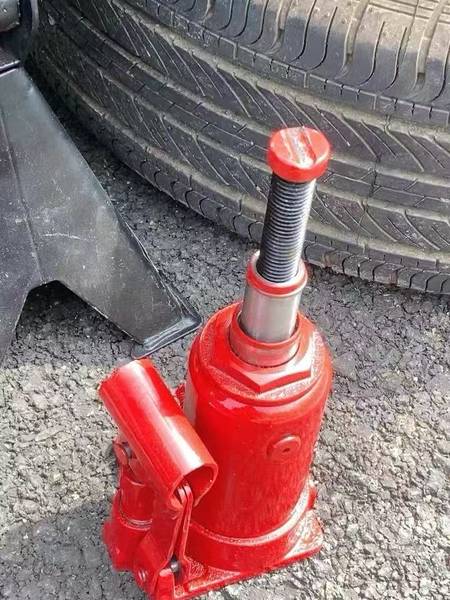
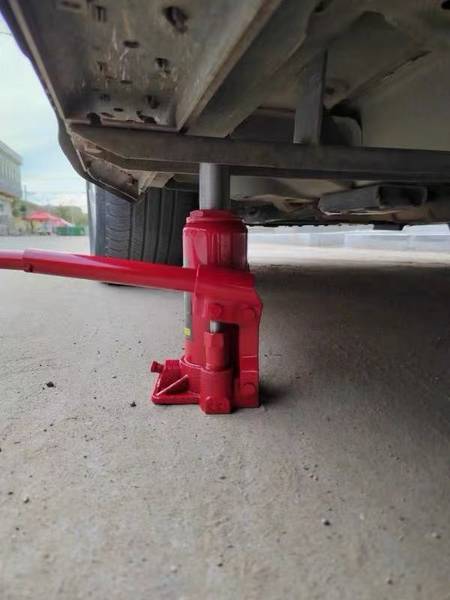
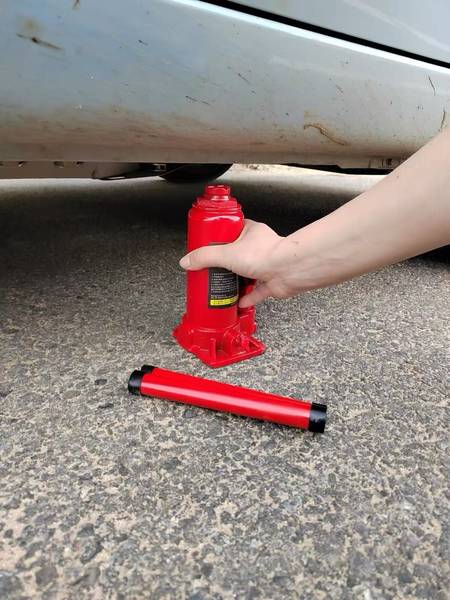
1. QYL Vertical Bottle Jack (Vehicle / Workshop, Red Integral Hydraulic)
| Model | Capacity (T) | Min. Height (mm) | Stroke (mm) | Max Height (mm) | Oil Pressure (MPa) | Weight (kg) | Piston Dia. (mm) |
|---|---|---|---|---|---|---|---|
| QYL2 | 2 | 181 | 115 | 296 | 70 | 2.4 | 28 |
| QYL3 | 3 | 193 | 120 | 313 | 70 | 3.2 | 32 |
| QYL5 | 5 | 210 | 136 | 346 | 70 | 3.9 | 36 |
| QYL8 | 8 | 230 | 150 | 380 | 70 | 5.0 | 40 |
| QYL10 | 10 | 230 | 150 | 380 | 70 | 6.0 | 45 |
| QYL16 | 16 | 230 | 150 | 380 | 70 | 7.1 | 50 |
| QYL20 | 20 | 242 | 150 | 392 | 70 | 9.1 | 55 |
| QYL32 | 32 | 260 | 160 | 420 | 75 | 17.5 | 65 |
| QYL50 | 50 | 300 | 180 | 480 | 75 | 25.3 | 78 |
- Built-in overload relief valve, rubber seals to prevent leakage
- Extension screw in top saddle adds 50–80mm extra height
- Comes with extended hand lever for single-person manual operation
- Application: Trucks, equipment, molds, tire changes
2. Floor Jack (Trolley Jack — Low Chassis, Caster Wheels)
| Capacity | Min. Height (mm) | Stroke (mm) | Max Height (mm) | Weight (kg) | Saddle Size (mm) |
|---|---|---|---|---|---|
| 2T Home | 140 | 150 | 290 | 6.5 | 90×70 |
| 2.5T Auto | 145 | 160 | 305 | 8.2 | 100×80 |
| 3T Heavy | 150 | 170 | 320 | 11.5 | 110×90 |
| 5T Low-Profile | 130 | 180 | 310 | 16 | 120×100 |
- Swivel caster wheels for easy positioning — ideal for low-clearance cars and SUVs
- Dual-pump rapid lift system, slow-release valve for controlled lowering
3. QL Screw Mechanical Jack (Worm Gear, No Hydraulic, No Leak)
| Model | Capacity (T) | Min. Height (mm) | Stroke (mm) | Handle Force (N) | Weight (kg) |
|---|---|---|---|---|---|
| QL5 | 5 | 250 | 130 | ≤320 | 5.2 |
| QL10 | 10 | 280 | 150 | ≤340 | 8.6 |
| QL20 | 20 | 320 | 180 | ≤380 | 18.5 |
| QL32 | 32 | 395 | 200 | ≤400 | 17.3 |
| QL50 | 50 | 400 | 200 | ≤420 | 46 |
- Worm gear self-locking — holds load even if power is lost, ideal for long-term support
- Screw: 45# hardened steel; nut: copper alloy wear-resistant; cast iron body
- Application: Bridge, steel structure, equipment permanent support
4. Split Single-Acting Hydraulic Cylinder (CLSG — Large Tonnage, Remote Pump)
| Capacity | Body Height (mm) | Stroke (mm) | Max Height (mm) | Cylinder OD (mm) | Weight (kg) | Oil Pressure |
|---|---|---|---|---|---|---|
| 10T | 100 | 50 | 150 | 80 | 3.2 | 70MPa |
| 20T | 120 | 50 | 170 | 100 | 5.8 | 70MPa |
| 30T | 130 | 60 | 190 | 115 | 8.5 | 70MPa |
| 50T | 162 | 50 | 212 | 130 | 12 | 70MPa |
- Hose: High-pressure rubber hose, rated 100MPa, standard 2m/3m/5m
- Hand pump: Rated output 70MPa, oil capacity 0.8–2L
- Coupler: 3/8" NPT standard with dust cap
- Cylinder separate from pump — for confined spaces, bridge synchronous lifting, equipment disassembly
Common Technical Specifications — All Jack Types
Safety
- Hydraulic: Built-in relief valve, overload auto-release. Never exceed rated capacity.
- Screw: Mechanical self-lock, load stays when handle stops.
Seals & Materials
- Piston: Hard chrome plated bore, wear and rust resistant. NBR oil-resistant seals.
- Body: Cast iron / heavy carbon steel, red anti-corrosion paint.
Discard Criteria
- Cracked or severely deformed cylinder, persistent oil leak beyond repair
- Worn/stripped screw threads, self-lock failure
- Deformed base, cracked or pitted saddle
Selection Guide
- Car tire change: 2T/3T QYL bottle jack
- Low-clearance auto shop: 2.5T/3T floor jack
- Long-term equipment support, no power: QL screw jack
- Confined space, bridge, heavy equipment dismantling: CLSG split cylinder jack
All Clever Lifting jacks are oil-filled and factory tested before shipment. Use 1.2× safety margin for load selection. Avoid prolonged full-load operation. Custom capacities and stroke lengths available for OEM orders.
Understanding Jack Ratings
A jack's headline number — 2 t, 20 t, 50 t — is its rated capacity, and it applies to a centred load on the saddle, on level ground, in the jack's intended orientation. Move the load off centre and the effective capacity falls, because the piston and the seals are now seeing a bending moment as well as a compressive one. The same applies to a jack used on a slope, on a soft surface, or with the ram extended to the end of its stroke.
- Rated capacity — the maximum static load. It is not a working rating for repeated cycling under a moving load.
- Stroke — the travel of the ram. Check the usable stroke, not just the maximum height: a jack at full extension is at its least stable.
- Minimum height — must clear the load's existing gap before you start. This is the number buyers most often forget.
- Oil pressure — a function of the load and the piston area, not a setting you adjust. On a 70 MPa (700 bar) system, pressure is high enough that a pinhole leak in a hose can inject oil through skin — inspect hoses before every use and never run a hand over a pressurised line.
For selection, apply a margin: a jack working at or near its rated capacity for long periods, or under a load that can shift, should be one size up. There is no single numeric safety factor published for jacks in either the European or the US standard — the rated capacity is the rating, and the margin you work to is yours to set.
Which Standard Applies to Your Jack?
Jack standards are product-specific, and it is worth knowing which one covers the type you are buying. A generic claim that a jack "meets international standards" tells you nothing.
- Vertical hydraulic (bottle) jacks, China — GB/T 27697-2024. This replaced JB/T 2104-2002, which was abolished in May 2017; a supplier still quoting JB/T 2104 is quoting a withdrawn standard.
- Horizontal / trolley jacks, China — JB/T 5315-2017.
- Screw jacks, China — JB/T 2592-2017.
- Europe — EN 1494 covers mobile and movable jacks and associated lifting equipment. Note its scope limit: EN 1494 excludes hydraulic equipment working above 500 bar where the pump and the cylinder are not integrated parts of the same equipment. A 70 MPa split cylinder set with a separate hand pump therefore falls outside EN 1494 and has to be assessed against the general machinery safety requirements instead.
- United States — ASME B30.1 covers jacks, industrial rollers, air casters and hydraulic gantries. B30.1 excludes jacks designed exclusively for automotive service, so a bottle jack sold purely for tyre changing may sit outside it.
- Marking — CE marking is the manufacturer's own declaration of conformity, not a third-party test certificate. If you need independent verification, ask for a test report from a notified body or an inspection agency such as SGS, BV or TUV.
On the regulatory side, note that EU Machinery Regulation (EU) 2023/1230 replaces Machinery Directive 2006/42/EC from 20 January 2027, with no parallel transition period. Machinery placed on the EU market on or before 19 January 2027 falls under the Directive.
What Actually Fails on a Hydraulic Jack
Hydraulic jacks rarely fail because the steel was too weak. They fail at the seals, at the hose, or because the load moved.
- Seal failure — the most common cause. NBR seals harden with age and with heat, then weep. A jack that will not hold a load up overnight has a failed seal, not a full hydraulic system, and it must be taken out of service rather than topped up and used.
- Contaminated oil — grit or water in the reservoir scores the piston bore and destroys every seal downstream. Keep the filler plug closed and the oil clean.
- Hose and coupler failure — on a split cylinder set, the hose is the weakest component. A kinked, chafed or over-age hose at 70 MPa is a genuine hazard. Check the coupler dust caps are fitted.
- Overload release valve actuation — the built-in relief valve is a failure protection device, not a working limit. A jack that has been repeatedly blowing off has been overloaded and should be inspected.
- Loss of stability — a ram extended to full stroke on an uneven surface will tip. Use cribbing and axle stands, never the jack alone, to support a load you are working under.
Jack Maintenance and Inspection
- Check the oil level and top up with the correct grade — do not substitute engine or gear oil
- Inspect the piston for scoring, rust and chrome damage at every use
- Check hoses for kinks, chafing, bulges and age cracking before every pressurised job
- Store with the ram fully retracted and the release valve closed, to keep the bore protected
- Keep the saddle and the base clean; grit on the saddle is how loads slide
- Bleed the system if the jack feels spongy: open the release valve and pump the handle several times
- Under LOLER 1998, jacks are lifting equipment and require a thorough examination at least every 12 months; jacks used for lifting people, or as a lifting accessory, move to the 6-month cycle
Frequently Asked Questions
What is the difference between a bottle jack and a floor jack?
A bottle jack stands vertically under the load and is compact, high-capacity and cheap — it is the right tool for a pinch point under a vehicle chassis, a machine base or a structural beam. A floor jack sits on casters with a long low arm, so it can slide under a low chassis and lift at a point you can reach. Floor jacks trade capacity for access; bottle jacks trade access for capacity.
When should I use a screw jack instead of a hydraulic one?
When the load has to stay up for a long time with no power and no supervision. A screw jack is mechanically self-locking — the load stays where you put it when the handle stops, and there is no hydraulic seal to weep and no oil to leak. They are slower and have less stroke, but for long-term support of heavy equipment, or in a plant where a slow hydraulic leak would be a serious problem, they are the safer choice.
Can I use a standard bottle jack on a construction site?
A bottle jack sold for automotive service may fall outside ASME B30.1, which excludes jacks designed exclusively for automotive use. For site work, specify a jack intended for industrial lifting, with a rated capacity and a documented standard, and use cribbing under the base so the jack is not standing on made ground.
Why does my jack sink slowly under load?
Almost always a worn or hardened seal, occasionally a contaminated check valve. It is not something to work around — a jack that will not hold is a jack that can drop a load. Stop using it and have the seal kit replaced.
Do you supply a 70 MPa split cylinder set with the pump?
Yes. The CLSG split single-acting cylinders ship with a matching hand pump, a high-pressure hose and a 3/8" NPT coupler. Standard hose lengths are 2 m, 3 m and 5 m. Because the pump and cylinder are separate, this set falls outside the scope of EN 1494 — if your project requires a specific certificate, tell us the standard at the enquiry stage and we will confirm what we can provide.