

Manual Pallet Truck
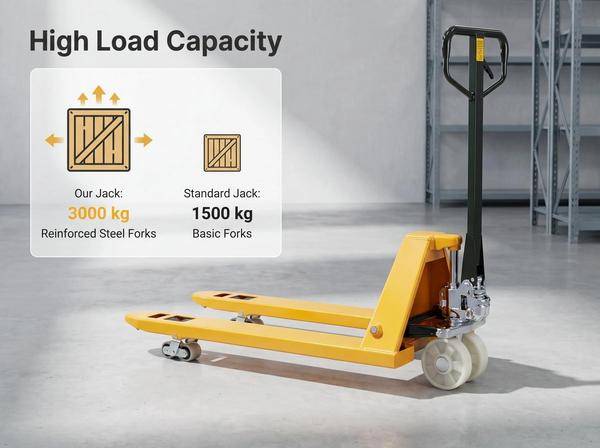
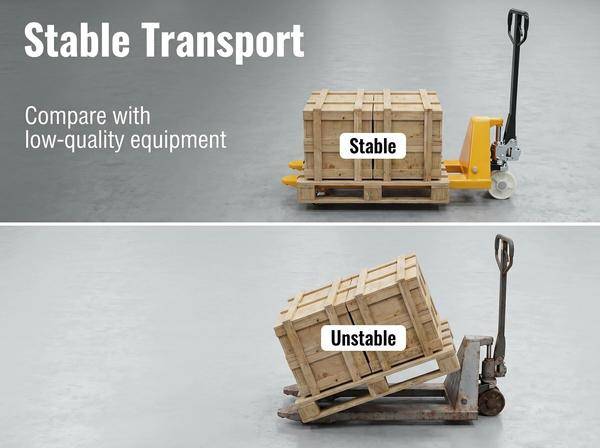
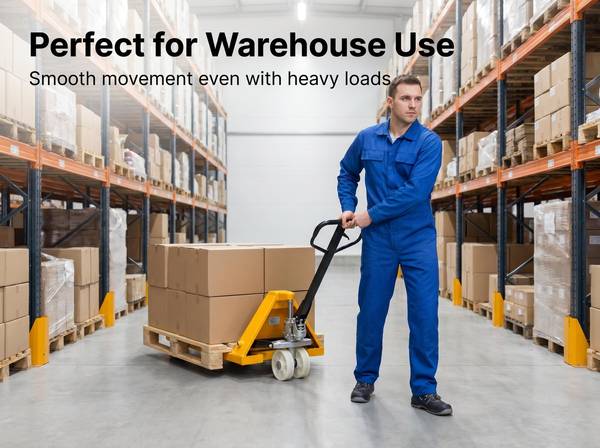
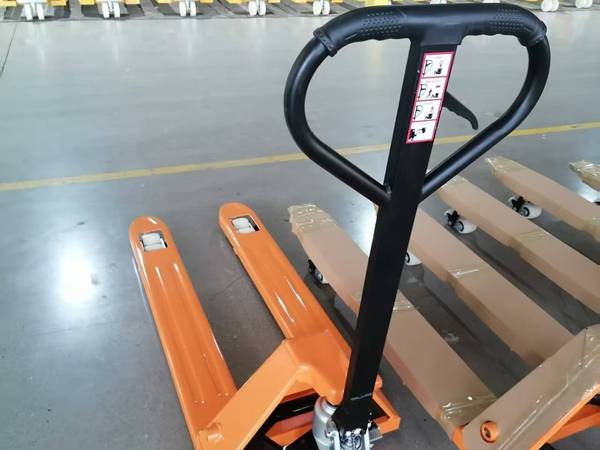
Our manual pallet trucks are engineered for efficient material handling in warehouses, factories, and distribution centers. Built with a heavy-duty steel frame, a reliable hydraulic pump, and ergonomic handle design, these hand forklifts provide smooth lifting and maneuvering with minimal effort. Available in multiple fork widths and lengths to suit standard and specialized pallets.
- High-strength steel frame with durable powder-coated finish
- Sealed hydraulic unit for reliable lifting and leak-free operation
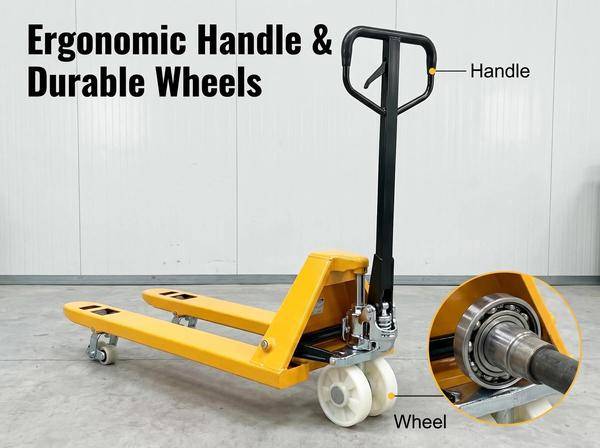
- Ergonomic handle with rubber grip for comfortable operation
- Polyurethane (PU) or nylon load wheels and steering wheels
- Overload relief valve protects hydraulic system from damage
- Easy maintenance —accessible pump and cylinder design
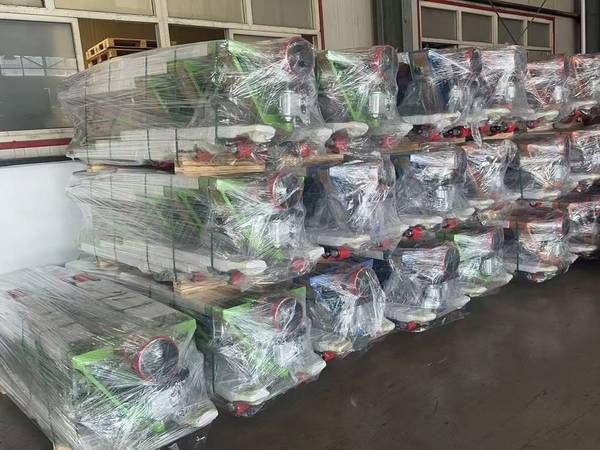
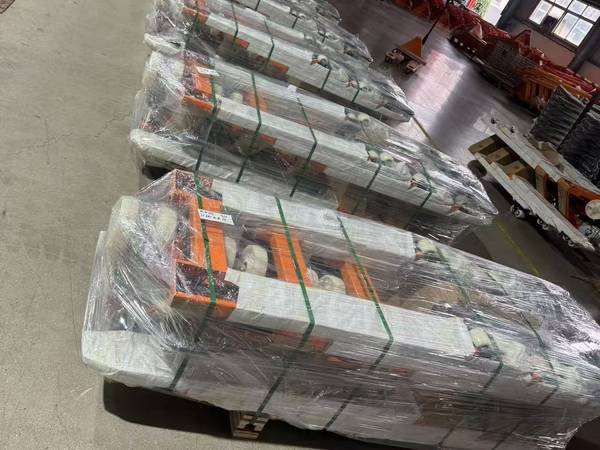
Product Gallery
Technical Specifications
| Model | Capacity (kg) | Fork Length (mm) | Fork Width (mm) | Lift Height (mm) | Wheel Type | Net Weight (kg) |
|---|---|---|---|---|---|---|
| CL-AC20 | 2000 | 1150 | 540 | 200 | PU / Nylon | 75 |
| CL-AC25 | 2500 | 1150 | 540 | 200 | PU / Nylon | 80 |
| CL-AC30 | 3000 | 1220 | 540 | 200 | PU / Nylon | 88 |
| CL-AC50 | 5000 | 1220 | 685 | 200 | PU / Nylon | 110 |
Applications
- Warehouse loading & unloading
- Factory production lines
- Retail stockrooms
- Logistics & distribution centers
- Food & beverage industry
- Cold storage environments
- Cross-docking operations
All Clever Lifting manual pallet trucks are built to EN ISO 3691-5 (within its 2,300 kg scope) and supplied with a CE declaration of conformity; heavier models are built to our own specification. Custom fork lengths, widths, and wheel configurations available for OEM orders. Contact us with your requirements for a tailored solution.
How to Choose a Hand Pallet Truck
A hand pallet truck is the simplest piece of equipment on this site and still the one most often bought wrong, because buyers compare on capacity alone. Capacity is the least interesting number in the specification.
Capacity — and Why 3 t Rarely Makes Sense by Hand
Rated capacity applies to a centred, uniformly distributed load on the forks. Move the load toward the fork tips and the effective capacity drops. More importantly, capacity and effort rise together: a 3 t truck is not simply a stronger 2 t truck, it is a heavier one that takes noticeably more force to get moving and to pump. Above roughly 2,200–2,500 kg, manual handling stops being practical for regular work — that is powered-truck territory. Buy 2 t rather than 3 t unless you genuinely move 3 t loads and infrequently.
Wheel Material Decides How It Feels
- Nylon — lowest rolling resistance, so the easiest to push. Hard and noisy, and it will mark soft or coated floors. Good on concrete docks and in areas with debris.
- Polyurethane (PU) — quiet, floor-friendly, and the usual choice for retail, food and pharmaceutical floors. Higher push force than nylon.
- Rubber / pneumatic — for uneven surfaces, outdoor yards and expansion joints. Softer ride, more effort, shorter life.
Fork Size Must Match Your Pallets
- EUR pallet (1200 × 800 mm) — 1150 × 540 / 550 mm forks
- Industrial pallet (1200 × 1000 mm) — 1150 × 540 mm forks
- GMA / North American pallet (48 × 40 in) — 27 in fork width
- Measure your actual pallets, not the nominal size. A truck that will not enter the pallet is the single most common return we see.
Low-Lift or High-Lift
Standard hand pallet trucks lift to about 200 mm — enough to move a pallet, not enough to stack one. If you need to place a pallet onto a rack or another pallet, you need a scissor-lift high-lift truck or a stacker, which is a different machine with a different stability case. Decide this before you order, because it cannot be retrofitted.
Which Standard Covers Hand Pallet Trucks?
This is worth understanding, because suppliers make loose claims about it and a buyer cannot tell one from another.
- Europe — EN ISO 3691-5:2015+A1:2020, the pedestrian-propelled industrial truck standard. It replaced EN 1757-2:2001, which is withdrawn; a supplier quoting EN 1757-2 is quoting a dead standard. EN 16307-5:2023 supplements it. Note the scope limit: EN ISO 3691-5 covers low-lift trucks up to 300 mm lift and 2,300 kg rated capacity, so a 3 t or 5 t hand pallet truck sits outside it and is assessed against the general machinery safety requirements instead.
- China — GB/T 26947-2023, which covers pedestrian pallet trucks up to 3,000 kg and 300 mm fork height.
- United States — there is currently no US standard written specifically for unpowered low-lift hand pallet trucks. ANSI/ITSDF B56.1 and OSHA 1910.178 both cover powered trucks, and B56.10 covers manually propelled high-lift trucks. Do not accept a claim that a hand pallet truck is "B56.1 certified".
- CE marking is the manufacturer's own declaration of conformity. It is a legal declaration, not a test certificate, and it is not issued by a third party.
Daily Checks, Maintenance and the One Rule Nobody Follows
A hand pallet truck has no brake. EN ISO 3691-5 excludes gradients from its scope for exactly that reason, and a hand pallet truck must never be used on a ramp or slope with a load on it. That single restriction accounts for more accidents than every mechanical failure combined.
Daily (Operator)
- Forks for cracks, bends or a bent tip
- Hydraulic oil weeping at the pump, the release valve or the ram seal
- Wheels and axles turning freely and clear of stretch wrap, string and grit
- Control lever clicking positively into all three positions — raise, neutral, lower
- Capacity label present and legible
Monthly and Annual
- Grease the wheel, axle and pivot points
- Measure fork tine heights at full lift; if the two tines differ by more than 5 mm, the push rods need realigning — the truck is lifting unevenly
- Check the hydraulic oil every 6 months and replace it annually (about 0.3 L, ISO VG32 or L-HV46). Never top up with engine or gear oil.
- Spongy forks mean air in the system: set the lever to LOWER and pump the handle 10–15 times to bleed it
- Store unloaded with the forks fully down, and move the truck in the drive position so the hydraulic seals are not under pressure while it rolls
- Push the truck rather than pulling it — pulling puts you off balance and the load between you and the truck
Frequently Asked Questions
What is the difference between a hand pallet truck and a stacker?
Lift height. A pallet truck lifts about 200 mm and is for horizontal movement only. A stacker lifts to 1600 mm or more and is for putting a pallet onto a rack or onto another pallet. If you need both, you need both machines, or a powered stacker that does the horizontal movement as well.
Can I use a hand pallet truck outdoors or on a slope?
Outdoors, yes, with rubber or pneumatic wheels and on a hard, level surface. On a slope, no. There is no brake on a hand pallet truck and none can be fitted. On a dock ramp, use a powered truck.
Why is my pallet truck hard to pump or slow to lift?
Usually low oil or air in the hydraulic circuit. Check the oil level and bleed the system first. If the forks still creep down under load, the ram seal has failed and needs replacing — it is a cheap part and a straightforward repair.
What does the truck weigh, and will it fit in a container?
Standard 2.5 t trucks are around 60–75 kg depending on fork length. They ship knocked down or assembled depending on quantity — tell us your order volume and destination port and we will confirm the loading plan.
Do you supply OEM branding?
Yes. Custom fork lengths, fork widths, wheel configurations, paint colour and branding are all available. Send us the specification or a sample and we will quote against it.