

Manual Hydraulic Stacker 1-2 Ton — CTY Series 850mm Forks
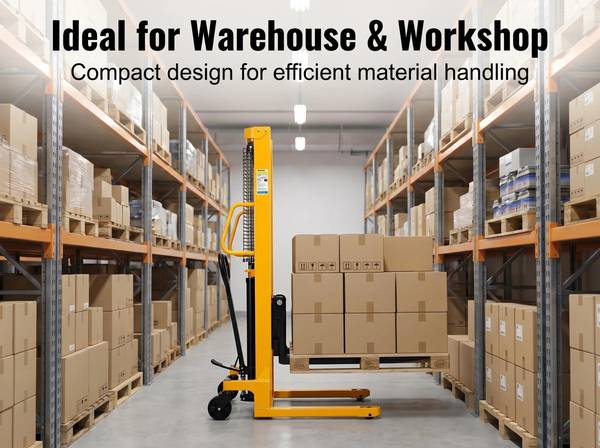
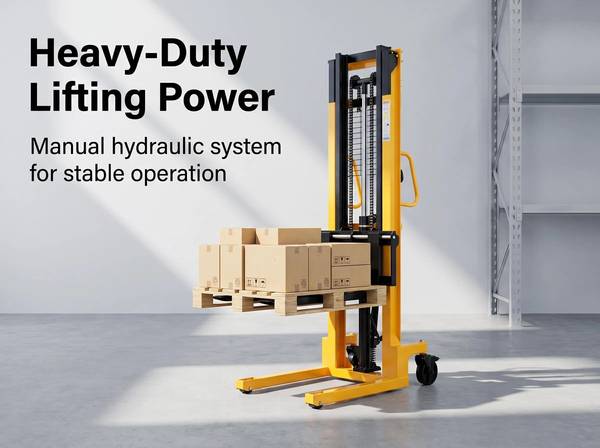
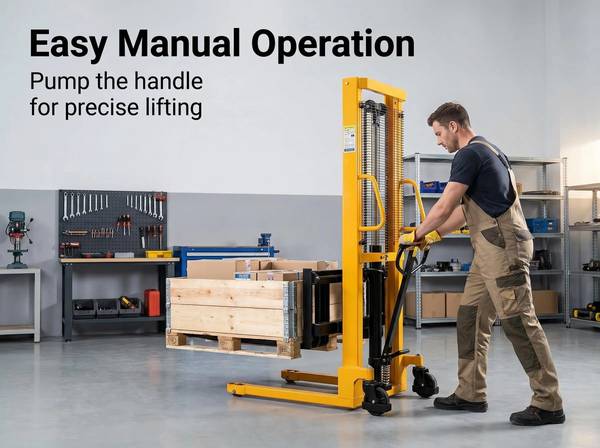
CTY series manual hydraulic stacker with 850mm fork length, available in 1 ton and 2 ton capacity. Foot pump hydraulic lift with manual release for controlled lowering. Ideal for warehouse stacking and material handling.
Request Quote →Product Gallery
Technical Specifications — CTY Series
| Model | Capacity | Max Lift Height | Fork Length | Overall Height | Cylinder |
|---|---|---|---|---|---|
| CTY10-16 | 1 ton | 1600mm | 850mm | 2050mm | Single cylinder |
| CTY10-20 | 1 ton | 2000mm | 850mm | 2460mm | Single cylinder |
| CTY20-16 | 2 ton | 1600mm | 850mm | 2090mm | Dual cylinder |
| CTY20-20 | 2 ton | 2000mm | 850mm | 2500mm | Dual cylinder |
Overall height is the height of the machine at full lift, mast extended — check it against door openings, mezzanine clearances and rack beams before you order. Lowered fork height is set by the chassis and the wheel configuration rather than by the mast, so confirm it for the exact model if you need to get under low-profile skids or stillages.
Common Specifications
- Lift mechanism: Foot pump hydraulic, manual release for controlled lowering
- Mast & drive: Heavy-duty C-channel steel mast, dual row load chains
- Wheels: Front nylon load wheels, rear swivel polyurethane brake castors
- Safety: Overload auto-relief valve, lift self-lock prevents load slipping
- Fork lowest height: 85mm from floor
All Clever Lifting CTY series manual hydraulic stackers are factory tested. Custom lift heights and fork dimensions available upon request.
Rated Capacity Is a Ground-Level Number
A stacker's rated capacity applies at its standard load centre and its standard lift height. As the forks go up, the usable capacity comes down — and this is not a quirk of one manufacturer, it is how stability works.
Raising a load lifts the combined centre of gravity of the truck and the load, while the stabilising moment provided by the truck's own weight stays fixed. The forward tipping moment about the front wheels grows with height. The result is that the residual capacity is always less than the rated capacity, and it falls steadily as the forks rise.
The load centre matters for the same reason. Rated capacity is defined at a standard load centre — commonly 500 mm or 600 mm — and a load whose centre of gravity sits further out than that reduces the capacity you can safely lift. A pallet loaded unevenly, or a load that is longer than the pallet, moves the centre out and eats into your margin.
If you are choosing between lifting to 1600 mm and lifting to 2000 mm, do not assume the higher mast gives you the same capacity. Tell us the weight, the pallet size and the height you need to reach, and we will confirm which model covers it.
What to Check Before You Buy
- Lift height — the height the fork needs to reach, measured to the top of the pallet, not the height of the rack beam
- Load centre — measure the actual centre of gravity of your heaviest load, not the pallet size
- Straddle width — the outer and inner width between the legs must clear your pallets and any racking feet
- Fork length — long enough to support the pallet fully; an overhanging load shifts the centre forward
- Floor condition — these trucks are specified for smooth, level, hard floors. EN ISO 3691-5 excludes gradients and uneven surfaces, so a stacker is not a yard machine.
- Load backrest — required for stackers with a lift height of 1800 mm or more, to stop the load shifting back into the mast
Which Standard Applies?
- Europe — EN ISO 3691-5:2015+A1:2020, pedestrian-propelled industrial trucks, which covers pallet stackers and pedestrian straddle stackers. It superseded EN 1757-1:2001, which is withdrawn. EN 16307-5:2023 adds supplementary requirements.
- Stability — ISO 22915-4:2018 is the stability verification standard for pallet stackers, covering rated capacities up to 5,000 kg.
- United States — ANSI/ITSDF B56.10, manually propelled high lift industrial trucks. ANSI/ITSDF B56.1 covers powered trucks and is not the standard for a manual stacker, whatever a listing may claim.
- Design limits worth knowing — the chain safety factor at rated capacity is 5 or better, hydraulic descent of a rated load must not exceed 25 mm in the first 10 minutes, and the parking brake must hold a laden truck on a 5% gradient.
Inspection and Maintenance
Before Every Use
- Chains or ropes for wear, corrosion and correct tension; both must be free of kinks
- Hydraulic ram and pump for leaks, and the truck for any drift with a load held at height
- Forks for cracks, bending, or a heel angle that has opened up
- Wheels turning freely and clear of debris
- Capacity plate present and legible
Scheduled
- Forks — inspect at least every 12 months, and withdraw any fork with blade thickness below 90% of original, a heel angle deviation greater than 3°, a tip height difference greater than 3% of the blade length, or any crack or permanent deformation
- Hydraulic system — check the oil level every six months and replace it annually; investigate any load drift immediately, since a stacker that settles under load is a stacker that can drop a pallet
- Chains — lubricate and check for even tension; uneven chain tension twists the mast and loads one side
- Records — under LOLER 1998 in the UK, a stacker is lifting equipment and requires a thorough examination by a competent person at least every 12 months
Frequently Asked Questions
Can I use a manual stacker on a loading ramp?
No. EN ISO 3691-5 and EN 16307-5 exclude gradients and uneven surfaces from the scope of these trucks, and a manually propelled stacker has no brake capable of holding a laden load on a slope. They are specified for smooth, level, hard floors.
Why does my rated capacity drop as I lift higher?
Because stability, not strength, sets the limit. Lifting the load raises the combined centre of gravity while the truck's stabilising weight stays the same, so the tipping moment grows with height. Every manufacturer's chart shows the same effect; the numbers differ, the direction does not.
What is the difference between a stacker and a pallet truck?
Lift height. A pallet truck lifts about 200 mm and moves pallets horizontally. A stacker lifts to 1600 mm, 2000 mm or more and places pallets onto racking or onto each other. If your work involves both, you need both machines.
Can I convert a manual stacker to electric lifting?
Not on the same chassis. A powered stacker has a different mast, a battery, a drive system and a different stability case, and the frame is not designed for the loads involved. Choose the powered version at the outset if you think you will need it.
What is the lowered height and why does it matter?
The lowered height is how low the forks go — it determines whether the stacker can get under a standard pallet or under a low-profile stillage or skid. It is the most common reason a stacker will not fit an existing process, and it is worth measuring the lowest gap in your operation before you order.